

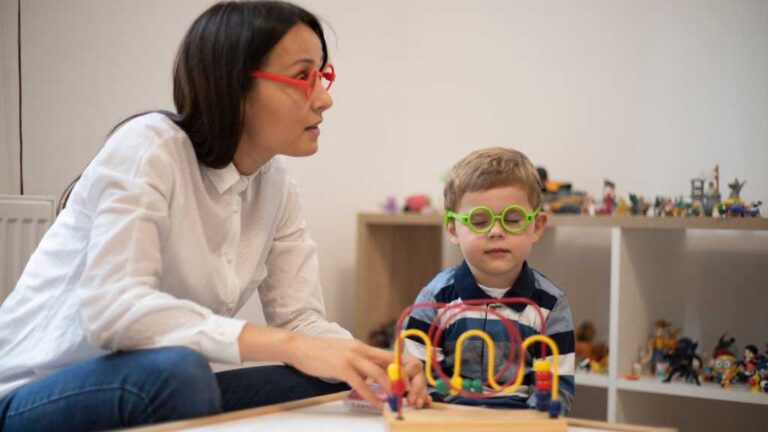
Play is the natural language of childhood. It’s how children learn about their world, build relationships, and express themselves. For parents of children with autism spectrum disorder (ASD), understanding how to provide the best support for their child’s development is a top priority.
For many families, this often leads to exploring different therapeutic approaches, where terms like “play therapy” and “ABA therapy” frequently appear. Many ask: What is the difference between ABA therapy and play therapy?
While both can involve play, they are distinct approaches with different goals and methods. It’s common for families to wonder which path is right for their child.
Understanding the core differences between Applied Behavior Analysis (ABA) therapy and play therapy is the first step in making an informed decision for your family.
This guide by ABA Centers of Florida will clarify the distinction between these two powerful therapeutic models. We will explore what each approach entails, highlight the unique benefits of play-based ABA therapy, and help you navigate your ABA care options in Florida.
What is Applied Behavior Analysis (ABA) Therapy?
ABA therapy is a scientifically validated therapy focused on improving specific behaviors and skills. According to autism research, ABA is the gold standard of care for individuals with autism.
The primary goal of ABA is to increase helpful behaviors and decrease those that can be challenging, unsafe, or interfere with learning.
An ABA treatment program is designed and overseen by a Board Certified Behavior Analyst (BCBA). This BCBA or Registered Behavior Technician conducts a detailed assessment to identify the child’s unique strengths and challenges.
Based on this, ABA professionals create a personalized treatment plan with specific, measurable goals.
These goals often target critical life skills, including:
- Communication and language
- Social skills and interaction
- Daily living skills (like dressing and hygiene)
- Academic and pre-academic readiness
- Emotional regulation and coping strategies
A Registered Behavior Technician (RBT) works hands-on and often in the home with the child to implement the plan, using evidence-based strategies like positive reinforcement to encourage progress.
Data is collected continuously to track the child’s development, allowing the BCBA to adjust and ensure the therapy remains effective.
How Play Fits into ABA Therapy
A common misunderstanding many have is that ABA therapy is always rigid and discrete-trial training-based. While structured teaching has its place, modern ABA, especially for young children, often incorporates play. This approach is known as play-based ABA or Naturalistic Environment Teaching (NET).
In play-based ABA, BCBAs and RBTs use a child’s natural interests and motivations to teach new skills. The learning happens within the context of fun, engaging activities.
For example, while playing with a toy train set, an RBT might guide a child to:
- Request a toy: “Can I have the blue train, please?”
- Take turns: Sharing the track with the therapist
- Follow directions: “Let’s make the train go through the tunnel.”
- Expand play: Adding new elements like people or buildings to the game
The key is that even though the child is playing, the ABA professionals are intentionally targeting specific developmental goals. Play becomes the vehicle for ABA learning, making sessions feel less like work and more like fun.
This play-based ABA approach helps children generalize skills to their everyday lives, from the classroom to the playground.
What is Play Therapy?
According to PubMed Central, play therapy is a form of psychotherapy used to help children express themselves and process their emotions. It is typically delivered by a licensed mental health professional, such as a psychologist, social worker, or counselor, with specialized training in play therapy techniques.
The core belief behind play therapy is that play is a child’s natural medium of communication. In a safe and supportive therapeutic environment, children use toys, games, and art to explore their feelings, make sense of difficult experiences, and develop coping mechanisms.
The therapist facilitates this process, helping the child build self-esteem, resilience, and emotional understanding.
Play therapy can be beneficial for children dealing with:
- Anxiety or depression
- Trauma or grief
- Major life changes like divorce or a move
- Social or emotional difficulties
Unlike ABA, the primary focus of play therapy is not to teach specific skills measurably. Instead, its goal is to promote emotional healing and psychological well-being.
Key Differences: ABA Therapy vs. Play Therapy
While both therapies value play, their clinical purpose, structure, and goals are what set them apart.
Here is a clear breakdown of the distinctions:
Primary Goal:
- ABA Therapy: To teach measurable skills and change behavior to improve daily functioning, independence, and quality of life.
- Play Therapy: To provide emotional support and help a child process feelings, trauma, and internal conflicts through self-expression.
Methodology:
- ABA Therapy: Uses structured and naturalistic teaching methods based on the principles of behavior analysis. Progress is tracked with data to guide treatment.
- Play Therapy: Is often child-led and non-directive, allowing the child to guide the session’s focus. The therapist and clinicians create a safe space for emotional exploration.
Focus:
- ABA Therapy: Focuses on building observable skills in communication, social interaction, and adaptive behaviors.
- Play Therapy: Focuses on a child’s inner emotional world and mental health.
Can a Child Benefit from Receiving Both ABA and Play Therapy?
Yes, many children can benefit from a collaborative approach. ABA therapy and play therapy are not mutually exclusive. A child with autism might receive ABA therapy to build essential communication and social skills while also attending play therapy sessions to work through anxiety or process a significant life event.
In other cases, play-based ABA therapy is utilized to help children reach their ABA goals and achieve more autonomy through play. Ultimately, this integrative ABA-based play approach can lead to more profound and lasting positive change for many.
For instance, ABA therapy might help a child learn the words to express frustration, while play therapy helps them understand the root of that feeling.
Choose a Path That Empowers Your Child
Understanding the differences between play therapy and ABA therapy is crucial for finding the proper support for your child. While play therapy offers a space for emotional expression, ABA therapy provides a structured, evidence-based path to developing critical life skills.
Play-based ABA combines the best of both worlds by making skill acquisition a fun and motivating experience.
More About Play-Based ABA Care with ABA Centers of Florida
At ABA Centers of Florida, we commit to providing compassionate and effective play-based ABA care. Our programs can help your child on the spectrum thrive, building skills that foster independence, communication, and confidence.
We believe in harnessing the power of play to unlock your child’s full potential. If you are exploring therapy options and want to learn more about how play-based ABA can support your child’s growth, our team is here to help.
Contact ABA Centers of Florida today for a free consultation online or call us at (772) 773-1975. Let’s talk about your child’s future.






 Español