


facebook

Advocating for Your Child with Autism: A Parent’s Guide to School Success

Parents meet with their child's teacher in a classroom advocating for your child with autism in school, with their young son seated between them

Table of Contents

How to Advocate for Your Child with Autism in School?

Sending your child to preschool or kindergarten is a milestone that brings excitement, pride, and often a few nerves for every parent. For families of toddlers with autism, those emotions are often accompanied by additional questions, worries, and things you need to do, including advocating for your child with autism.

Autism advocacy in school starts with building a collaborative relationship with your child’s educational team, understanding the available resources, and helping others recognize how your child learns best.

In this blog, ABA Centers of Florida explains what advocating for your child with autism looks like, how to prepare for school meetings, which school accommodations for autism may support your toddler’s learning, and how parents, educators, and ABA professionals can work together to help children succeed.

What Does Advocating for Your Child with Autism Mean?

When parents hear the word “autism advocacy,” they sometimes picture difficult meetings or disagreements with the school. Advocating for your child with autism often begins with something much simpler: helping others understand your child.

You know your toddler better than anyone else. You know what helps them stay calm, what situations may become overwhelming, how they communicate, what motivates them, and which strategies work best at home.

  • Teachers bring educational expertise
  • Therapists contribute clinical knowledge
  • Parents contribute something equally valuable: a deep understanding of their child

Successful autism advocacy happens when those perspectives come together. Rather than asking, “How do I convince the school?” a more helpful question is: “How can we work together to help my child succeed?”

Effective autism advocacy in school often includes:

  • Learning about your child’s educational rights and available supports
  • Sharing information about your child’s strengths, interests, and challenges
  • Asking questions whenever something is unclear
  • Working collaboratively with teachers, therapists, and school staff
  • Reviewing your child’s progress regularly and adjusting supports as their needs change
  • Celebrating successes while continuing to address new challenges as they arise

Why Does Autism Advocacy Matter Before School Challenges Begin?

Many parents don’t think about autism advocacy until something goes wrong. Perhaps their child is struggling with transitions. Maybe communication is difficult in the classroom, or sensory sensitivities begin interfering with learning.

While those situations certainly deserve attention, advocating for your child with autism in school is most effective when it begins early.

Meeting with teachers before school starts allows everyone to understand your child’s strengths, interests, communication style, and support needs before challenges arise.

Instead of reacting to problems, families and educators can prepare together.

Research continues to show that collaborative relationships between families and schools contribute to better educational experiences for children with autism while reducing stress for caregivers.

How Can Parents Prepare Before Meeting with the School?

Walking into your first school meeting can feel intimidating. Many parents worry they won’t know what questions to ask or what information to bring.

The good news is that preparation doesn’t require becoming an expert on special education. It simply means helping the school understand your child as an individual.

Before the meeting, consider gathering information such as:

  • Your child’s autism evaluation or diagnostic report
  • Recent ABA, speech, or occupational therapy recommendations
  • A list of your child’s strengths and interests
  • Situations that tend to be challenging
  • Strategies that work well at home
  • Questions or concerns you’d like to discuss

It can also help to write down examples from everyday life. For instance, your toddler may transition more successfully when given a visual countdown, communicate best using pictures or gestures, or need extra time to process verbal instructions.

These practical examples often give teachers a much clearer understanding of your child’s needs than a diagnosis alone.

What School Accommodations for Autism Can Support Your Child?

One of the most common questions parents ask is whether schools can make adjustments that help children learn more successfully. The answer is often yes.

School accommodations for autism are supports that help students access learning while recognizing their individual strengths and challenges. The specific school accommodations for autism depend on the students’ needs and educational plan.

Some accommodations support communication. Others address sensory needs, attention, transitions, or classroom participation.

For toddlers and young children, common school accommodations for autism may include:

Communication Supports

Children who process language differently may benefit from visual supports or additional time to respond.

Examples include:

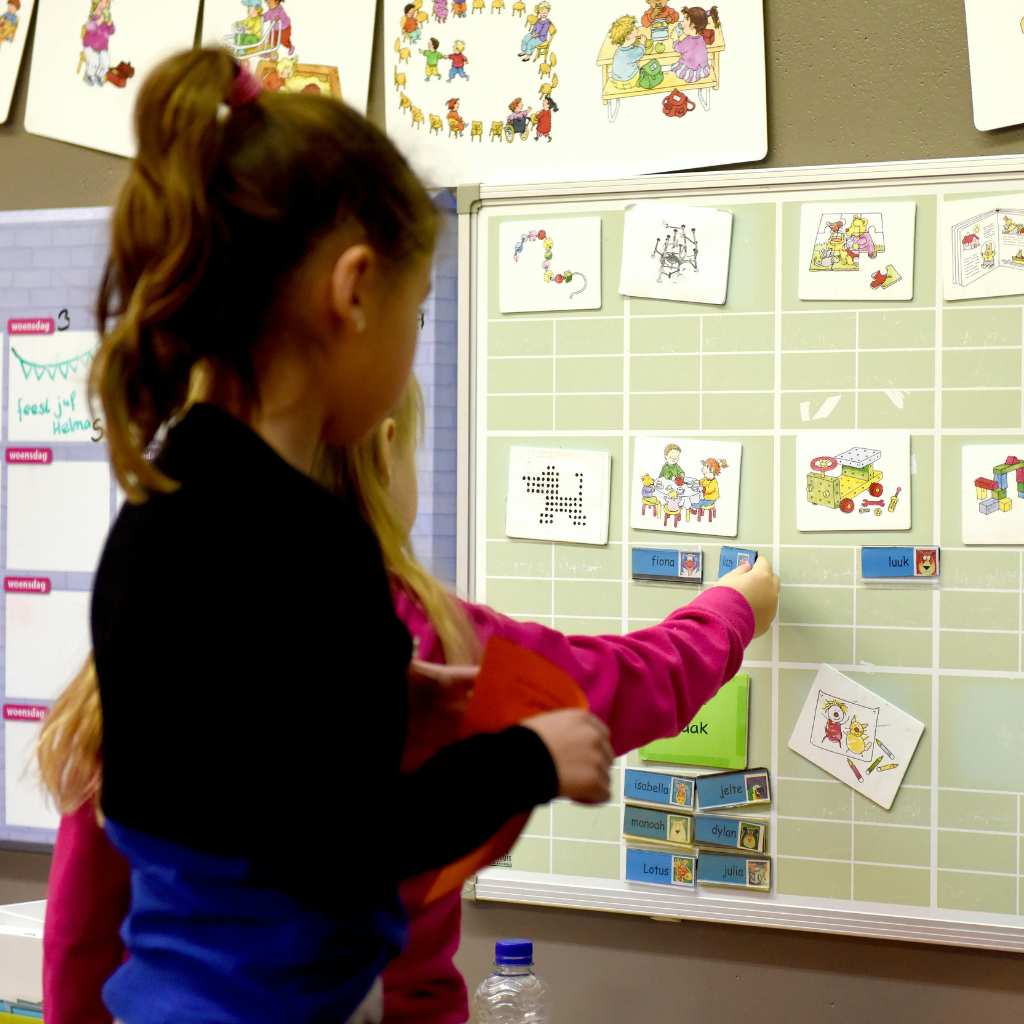
  • Visual schedules
  • Picture communication systems
  • Extra processing time after questions
  • Simple, step-by-step instructions

These supports reduce frustration while encouraging communication.

Young girl selecting a picture card from a visual schedule board in a classroom, using school accommodations for structured learning

Sensory Supports

Many children on the spectrum experience sensory sensitivities that affect their ability to participate in classroom activities.

Possible accommodations include:

  • Access to a quiet space when overwhelmed
  • Noise-reducing headphones during loud activities
  • Flexible seating options
  • Scheduled movement breaks

These accommodations help children regulate themselves without removing them from learning opportunities.

Classroom and Learning Supports

Young children often benefit from predictable routines and clearly structured activities.

Teachers may consider:

  • Breaking larger tasks into smaller steps
  • Providing transition warnings before changing activities
  • Using visual cues alongside verbal directions
  • Offering additional time to complete certain activities

These strategies help toddlers understand expectations while reducing anxiety around new or unfamiliar situations.

Social Supports

For many toddlers, social interaction is still developing.

Schools may help by providing:

  • Structured play opportunities
  • Guided peer interactions
  • Adult support during group activities
  • Opportunities to practice turn-taking and cooperative play

These experiences encourage participation while respecting each child’s developmental level.

Does My Child Need an IEP or a 504 Plan?

One of the first questions parents ask after receiving an autism diagnosis is whether their child will need an Individualized Education Program (IEP) or a Section 504 Plan. While both are designed to support students with disabilities, they serve different purposes.

An IEP is intended for students who qualify for special education services under the Individuals with Disabilities Education Act (IDEA). It includes individualized educational goals, specialized instruction, related services, and accommodations that help the child access and make progress in the curriculum.

A 504 Plan, on the other hand, is designed for students who do not require specialized instruction but still need accommodations to participate fully in school. These accommodations might include sensory supports, additional time for tasks, preferential seating, or visual schedules.

Not every child with autism will qualify for the same type of support, and eligibility is determined through an evaluation completed by the school district. During this process, parents have the right to ask questions, review evaluation results, and actively participate in decisions about their child’s educational plan.

Understanding the difference between these two options allows parents to participate more confidently in conversations with the school and advocate for supports that reflect their child’s individual needs.

How Can ABA Therapy Support Your Child’s Success at School?

ABA therapist holds a clipboard while leading a group session with young children seated in a school classroom, supported by their teacher

School is one environment where children spend a significant portion of their day, but learning doesn’t happen in isolation. The skills children practice during ABA therapy are intended to carry over into classrooms, playgrounds, lunchrooms, and everyday interactions with teachers and classmates.

For toddlers and young children preparing to enter preschool or kindergarten, ABA therapy often focuses on foundational skills that support school readiness. These may include learning to communicate needs, following simple directions, transitioning between activities, participating in group routines, waiting for a turn, or developing early play skills.

The BCBA works closely with the family to identify meaningful goals that improve everyday functioning. With parental consent, ABA providers may also collaborate with teachers or school staff to share strategies that help the child succeed across different environments.

This collaboration benefits everyone involved. Teachers gain a better understanding of how the child learns, parents receive more consistent feedback, and children experience the same expectations and teaching strategies at home, during therapy, and at school.

Rather than viewing school and therapy as separate experiences, many families find that progress happens more naturally when everyone works toward the same goals.


What If the School Doesn’t Understand Your Child’s Needs?

Even with preparation, there may be times when you feel your child’s needs are not fully understood. Perhaps a teacher is unfamiliar with autism, accommodations are not being implemented consistently, or communication between home and school becomes challenging.

These situations can be frustrating, but autism advocacy is often most effective when conversations remain collaborative and focused on finding solutions.

If concerns arise, begin by requesting a meeting with the appropriate members of your child’s educational team. Bring documentation that helps explain your child’s needs, including evaluation reports, therapy recommendations, or examples of successful strategies used at home or during ABA sessions.

During the conversation, focus on describing specific situations rather than making general statements. For example, instead of saying, “My child struggles at school,” you might explain, “My child has difficulty transitioning between activities without visual reminders, but using a picture schedule has been very successful during therapy.”

Providing concrete examples helps educators understand not only the challenge but also practical ways to support your child.

Helping Your Child Thrive Begins with Working Together

Advocating for your child with autism in school means staying curious, asking questions, and building strong partnerships with the people who will help support your child’s learning every day.

At ABA Centers of Florida, we believe parents are essential members of every child’s support team. In addition to providing individualized ABA therapy in our clinics and at home, we also offer in-school ABA therapy for children who need support within their educational environment.

Our ABA therapists align interventions with the academic curriculum, supporting effective behavior management and enhancing the overall learning experience. Through this collaborative model, therapists, teachers, and families work together to ensure that your child’s progress is supported across all settings.

If your child has recently been diagnosed with autism or is preparing to start school, call (772) 773-1975 or contact us online to learn how our team can support your family.

Educational Disclaimer: This article is intended for informational and educational purposes only and should not be considered legal advice. Educational rights, eligibility, and school procedures may vary depending on your child’s individual circumstances and applicable federal and Florida laws.


Discover how our autism treatment services can help you.

Get Social With Us

Related Posts

es_ESEspañol
Scroll to Top
metricool