

Table of Contents
What does the Autistic Barbie mean for the Autism Community?
Families raising children on the autism spectrum often look for ways to create a more inclusive world for their kids. That search goes far beyond schools or therapy settings and reaches everyday spaces like playgrounds, classrooms, and even toy boxes.
Representation matters, especially during childhood, when play shapes how children see themselves and others.
That’s why Autistic Barbie has sparked so much conversation. Parents, caregivers, and educators across the country are asking whether this doll truly supports children with autism or if it simply scratches the surface of a much broader experience. Others wonder how toys like this influence children without autism and what role they play in building empathy and understanding.
At ABA Centers of Florida, we believe these conversations matter. In this guide, we take a closer look at Autistic Barbie, what autism representation in toys really means, and how families and the autism community are responding. We will also explore why inclusive play plays a vital role in child development.
What Is Autistic Barbie?
Autistic Barbie is part of Mattel’s Barbie Fashionistas line, which focuses on celebrating diversity and inclusion. Mattel developed the doll in collaboration with autism advocates and specialists to reflect everyday experiences associated with autism in a thoughtful and respectful way.
Rather than presenting autism as a single story, Autistic Barbie introduces children to the idea that people experience the world differently. The doll includes design elements meant to reflect sensory and communication needs that many autistic individuals navigate daily.
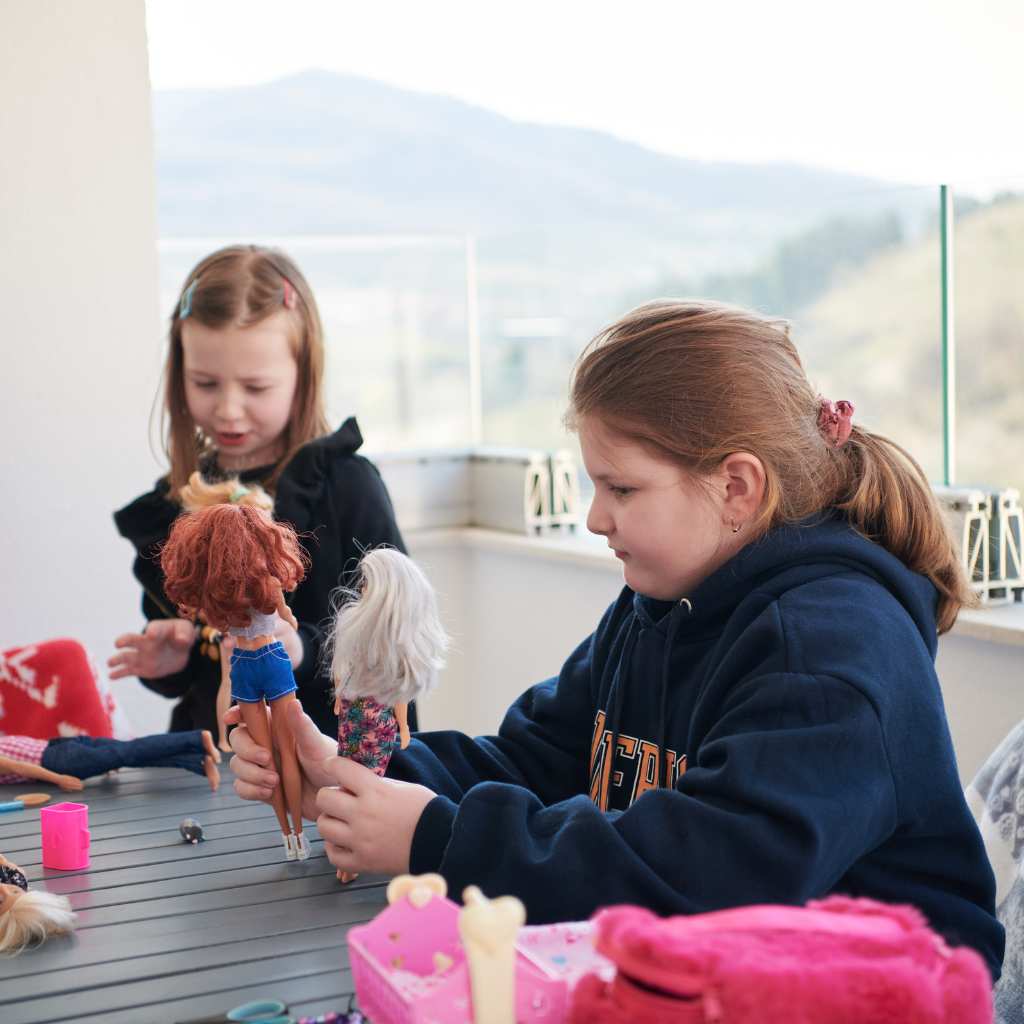
Key features of Autistic Barbie include:
- Noise-canceling headphones to support sensory needs
- A small fidget toy for self-regulation
- Sensory-considerate clothing designed for comfort
- An AAC device, representing alternative communication methods
- A sunflower necklace, recognized as a symbol of hidden disabilities
- Eye gaze and articulation that reflect traits such as reduced eye contact and expressive hand movements
Each feature is thoughtfully selected to represent everyday experiences and needs common in the autism community.
Autistic Barbie does not attempt to define autism. Instead, she opens the door for conversations about neurodiversity in a way children can understand through play.
Why Autism Representation in Toys Matters
Autism representation in toys is not about labeling children. It’s about visibility, normalization, and belonging.
Children learn through play. They build stories, imagine relationships, and explore emotions using the toys they interact with daily. When toys reflect diversity, children absorb the message that differences are normal and valuable.
For children with autism, seeing themselves represented can help reinforce a positive self-image. It sends a powerful message: “I exist, I belong, and I matter.” For children without autism, inclusive toys encourage curiosity, empathy, and acceptance without requiring formal explanations.
Research and lived experience consistently show that early exposure to diversity reduces stigma later in life. Autistic Barbie supports that process by making neurodiversity part of everyday play rather than something separate or unfamiliar.
How Families Are Responding to Autistic Barbie
Parents’ reactions to Autistic Barbie often feel deeply personal. Many families of children on the spectrum share that the doll helps their child feel seen and understood. Others appreciate how the doll creates opportunities to talk about sensory needs, communication differences, and emotional regulation in age-appropriate ways.
Parents of neurotypical children often see Autistic Barbie as a tool for teaching kindness and inclusion. Children do not approach the doll with judgment. To them, she is simply another Barbie with accessories that make her unique.
At the same time, some families express concerns. Autism exists on a broad spectrum, and no single doll can represent every experience. Some caregivers worry that Autistic Barbie may not reflect children with higher support needs or more significant challenges.
These concerns are valid. Representation should never replace real education, support, or individualized understanding. Still, most families agree that inclusive toys like Autistic Barbie serve as a meaningful starting point rather than a final statement.
How Children Are Responding to Autistic Barbie
One of the most encouraging responses comes directly from children themselves.
In everyday conversations with families, children—both neurodiverse and neurotypical—show excitement and curiosity rather than confusion. They engage in imaginative play, assign personalities, and include Autistic Barbie in their stories just like any other doll.
Children do not ask whether she is “different enough” or “accurate enough.” They accept her presence naturally. That acceptance reflects something important: when diversity feels normal, children treat it as usual.
Autistic Barbie allows inclusion to happen organically through play, without pressure or explanation.

Perspectives Within the Autism Community
The autism community holds diverse viewpoints, and their reactions to Autistic Barbie reflect that diversity.
Many advocates and autistic adults have praised the doll for acknowledging sensory needs that often go unseen. Items like headphones, fidget tools, and AAC devices resonate strongly with lived experiences. Advocacy organizations have also noted that positive representation can support self-esteem and identity development for autistic children.
Others emphasize that autism representation should continue expanding. Autism looks different for every individual, and inclusive media should reflect that range over time. These perspectives highlight an essential truth: representation is an ongoing process, not a one-time solution.
Autistic Barbie does not claim to represent everyone. She contributes to a broader conversation about inclusion, visibility, and progress.
Why Inclusive Play Supports Healthy Development
Play helps children practice social skills, emotional expression, and problem-solving. Inclusive toys enhance these benefits by reflecting real-world diversity.
Inclusive play helps children:
- Develop empathy and understanding
- Normalize differences early in life
- Reduce fear or stigma through familiarity
- Explore social situations through imagination
When children grow up surrounded by diverse representations, they carry those values into friendships, classrooms, and communities.
Autistic Barbie supports this learning by showing that differences are not barriers to belonging.
The Role of Play in ABA Therapy
Play also plays a central role in evidence-based interventions like Applied Behavior Analysis (ABA) therapy. Play-based ABA therapy uses a child’s interests to build communication, social interaction, and independence in meaningful ways.
Through play-based ABA, therapists help children:
- Develop functional communication skills
- Strengthen social engagement
- Practice emotional regulation
- Build confidence in everyday routines
Play is not separate from learning. It creates natural opportunities for growth in real-life contexts.
ABA Centers of Florida Supports Your Loved One on the Spectrum
At ABA Centers of Florida, we believe children thrive when they feel understood, respected, and supported. Our ABA therapy programs meet children where they are and build on their interests, strengths, and goals.
Whether a child connects with dolls like Autistic Barbie, imaginative play, games, or hands-on activities, our therapists use those interests to support meaningful development. We offer individualized ABA therapy services designed to support communication, social skills, independence, and emotional well-being.
Inclusive representation in toys and inclusive support in therapy work go hand in hand. Both help children feel valued and capable.
If your family is looking for compassionate, evidence-based ABA services in Boca Raton, Orlando, Tampa, Celebration, Miramar, and more areas of Florida, contact ABA Centers of Florida online or call (772) 773-1975. Together, we can help children grow in confidence, connection, and belonging.





 Español