


facebook

How is Autism Diagnosed? A Complete Guide for Parents

A-clinician-explaining-to-parents-how-is-autism-diagnosed

Tabla de contenidos

How Do Clinicians Test for Autism? 

When parents first begin to wonder about their child’s development, one of the most important questions that comes up is: How is autism diagnosed?
 
The answer is not as simple as a single test or checklist. The autism diagnosis process is a structured, multi-step evaluation that looks at how a child communicates, interacts, and behaves across different settings. Understanding how this works can help you move from uncertainty to informed action.
 
En este blog de ABA Centers of Florida, we’ll walk you through how autism is diagnosed, what happens during autism testing and diagnosis, who is involved, what tools are used, and how to navigate each step with confidence.
 

What Does “Diagnosis” Actually Mean in Autism?

Before diving into the steps, it’s important to clarify what diagnosis involves.

Autism spectrum disorder (ASD) is a neurodevelopmental condition, which means it is identified based on patterns of behavior and development, not through blood tests, imaging, or a single medical exam.

Instead, professionals evaluate:

  • Social communication
  • Interaction patterns
  • Repetitive behaviors or restricted interests
  • Developmental history
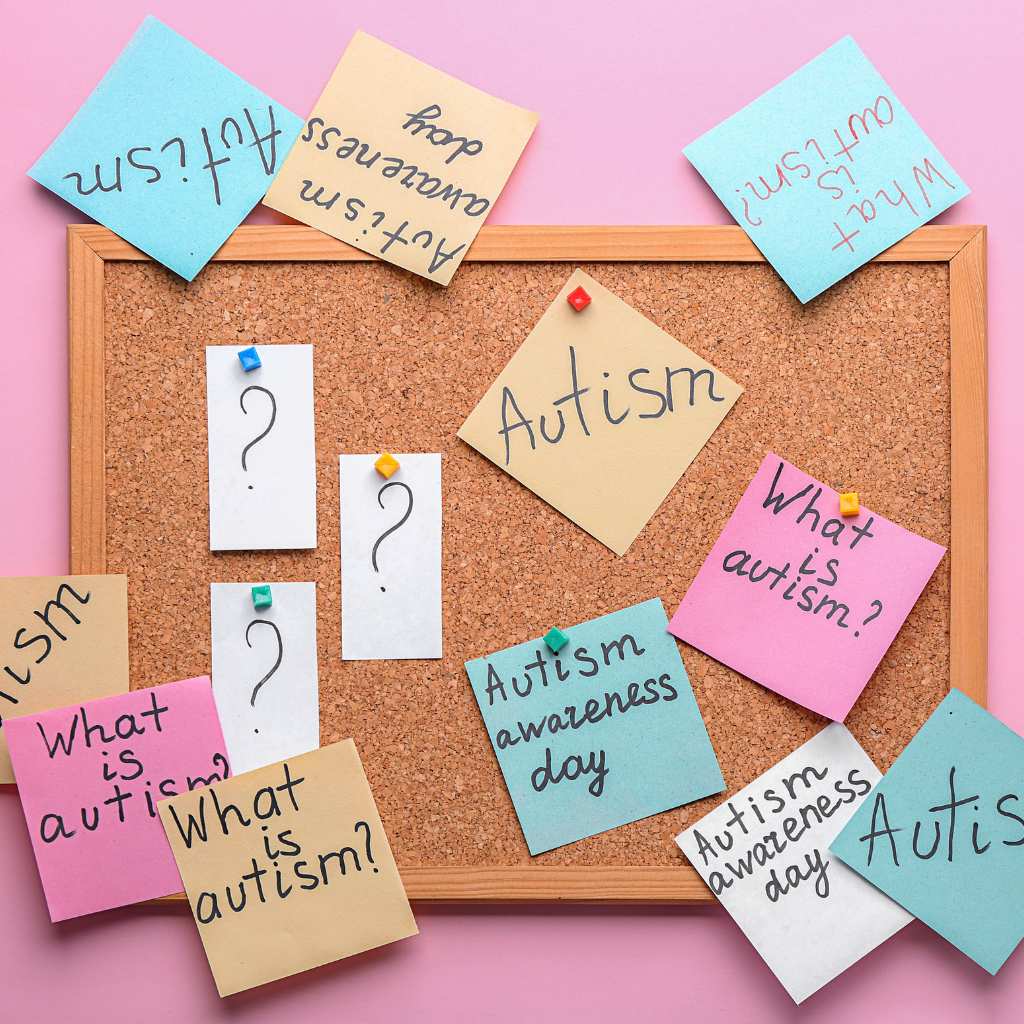
Cluster of pastel sticky notes around a board, all focused on autism awareness

How Is Autism Diagnosed: Step-by-Step Process

Understanding how is autism diagnosed becomes clearer when you break it into stages. While the exact process may vary slightly, most evaluations follow a similar path.

1. Developmental Monitoring

This often begins at home.

Parents are usually the first to notice differences, such as delayed speech, reduced eye contact, or limited interaction. These early observations are a key part of the autism diagnosis process.

Pediatricians also monitor development during regular checkups, focusing on milestones in communication, play, and behavior.

2. Developmental Screening

If concerns arise, the next step is screening.

Developmental screenings are short, structured tools used to identify potential delays. According to the American Academy of Pedriatics (AAP), screening is recommended at:

  • 9 months
  • 18 months
  • 24 or 30 months

Screenings do not diagnose autism, but they help determine whether a child should move forward to a full evaluation.

3. Comprehensive Diagnostic Evaluation

This is the most important stage in understanding how is autism diagnosed.

A comprehensive evaluation involves a detailed assessment by specialists, which may include:

  • Developmental pediatricians
  • Psychologists
  • Speech-language pathologists
  • Behavioral specialists

During this phase, professionals conduct autism testing and diagnosis using standardized tools and direct observation.

They evaluate how the child:

  • Communicates (verbal and nonverbal)
  • Interacts socially
  • Responds to their environment
  • Engages in play

What Tools Are Used in Autism Testing and Diagnosis?

A common question parents have is whether there is a specific “test” for autism.

In reality, autism testing and diagnosis rely on a combination of validated tools and clinical expertise.

Some widely used tools, according to the National Autistic Society, include:

ADOS-2 (Autism Diagnostic Observation Schedule)

A structured, play-based assessment that allows clinicians to observe social and communication behaviors in real time.

ADI-R (Autism Diagnostic Interview-Revised)

A detailed interview with parents, focusing on developmental history and behavioral patterns.

DSM-5 Criteria

Clinicians use diagnostic criteria from the Diagnostic and Statistical Manual of Mental Disorders (DSM-5) to determine whether a child meets the definition of autism.

What Professionals Look for During Diagnosis

Clinician performing an autism diagnosis evaluation

To understand how is autism diagnosed, it helps to know what clinicians are actually observing.

They are not looking for a single behavior. Instead, they assess patterns across:

Social Communication

  • Eye contact
  • Use of gestures
  • Back-and-forth interaction
  • Response to name

Behavior and Interests

  • Repetitive actions
  • Sensibilidades sensoriales
  • Strong preferences for routines

Developmental History

  • When milestones were reached
  • How behaviors have changed over time

This combination of observation and history defines the autism diagnostic process.

At What Age Can Autism Be Diagnosed?

Autism can sometimes be identified as early as 18 to 24 months, although many children are diagnosed later.

Research shows that early signs may appear before age 2, especially in communication and social interaction. However, diagnosis depends on the clarity and consistency of those patterns.

The earlier autism is identified, the sooner support can begin.

Why Early Diagnosis Matters

Understanding how is autism diagnosed is not just about labeling, it’s about access to support.

Early diagnosis allows families to:

  • Begin early intervention
  • Build communication skills sooner
  • Support social development
  • Reduce long-term challenges

Studies, including those published in peer-reviewed journals, highlight that early identification is associated with better developmental outcomes.


What Happens After an Autism Diagnosis?

After completing the autism diagnosis process, families receive a detailed report outlining:

  • The child’s strengths and challenges
  • Whether diagnostic criteria are met
  • Recommended next steps

One of the most common recommendations is early intervention, which may include therapies focused on communication, behavior, and daily living skills.

The Role of ABA Therapy After Diagnosis

Following autism testing and diagnosis, many families are introduced to ABA therapy.

ABA (Applied Behavior Analysis) focuses on helping children:

  • Desarrollar habilidades de comunicación
  • Improve social interaction
  • Build independence
  • Reduce behaviors that interfere with learning

ABA is effective because it breaks skills into manageable steps and teaches them in a structured, individualized way.

When started early, ABA therapy can support meaningful progress in areas that were identified during diagnosis.

Common Questions Parents Have

Is there a medical test for autism?

No. Autism is diagnosed through behavioral and developmental evaluation, not blood tests or scans.

Can a pediatrician diagnose autism?

Some pediatricians can identify signs, but a formal diagnosis typically requires specialists trained in the full diagnostic process for autism.

Should I wait if I’m unsure?

Waiting can delay support. If you’re asking how is autism diagnosed, it’s often a good sign that you should begin the evaluation process.

How to Start the Autism Diagnosis Process

If you’re concerned about your child, here’s a simple way to begin:

  1. Document what you’re observing
  2. Talk to your pediatrician
  3. Request a developmental screening
  4. Ask for a referral for a full evaluation

Taking these steps helps you move from uncertainty to clarity.

Getting Support in Florida

En ABA Centers of Florida, families often reach out when they begin asking questions about how is autism diagnosed.

Our team guides families through the autism diagnosis process, from initial concerns to evaluation and beyond. Once a diagnosis is confirmed, we provide individualized ABA therapy focused on building real-life skills in communication, interaction, and independence.

If you’re ready to begin or want to better understand your options, you can call (772) 773-1975 o completa nuestro formulario en línea to speak with a specialist.

Descubra cómo nuestros servicios de tratamiento del autismo pueden ayudarlo.

Contáctenos

Artículos Relacionados

en_USEnglish
Scroll al inicio
metricool