


What Are Some Developmental Milestones My Toddler Should Have?
It’s a question many parents quietly ask themselves: Is my 18-month-old behind?
At this age, toddlers are changing quickly. Some are starting to use words. Others are walking confidently, pointing at objects, or showing strong preferences. But when a child isn’t doing what other toddlers seem to be doing, it’s natural to worry.
Development at 18 months can vary. Not every child follows the exact same timeline. However, understanding typical 18-month-old developmental milestones can help parents recognize when a delay may simply reflect individual variation — and when it might signal the need for further evaluation.
En este blog de ABA Centers of Florida, we’ll review what most toddlers are doing by 18 months, possible signs of developmental delay, when autism may be considered, and what steps families can take next.
If you have concerns about your child’s development and would like to speak with a professional, our team is here to help. Reach out anytime for guidance or support.
What Should an 18-Month-Old Be Doing?
While development varies, the CDC outlines several common toddler developmental milestones around age 18 months, including:
Language and Communication
By 18 months, many toddlers:
- Say several single words (beyond “mama” and “dada”)
- Try to imitate words
- Point to show interest
- Follow simple one-step directions without gestures
Social and Emotional Development
Most children at this age:
- Show affection to familiar people
- Look at caregivers for reassurance in new situations
- Point to share interest (for example, pointing at an airplane)
- Play simple pretend games, like feeding a doll
Cognitive Skills
Common cognitive 18-month-old developmental milestones include:
- Knowing what familiar objects are used for
- Pointing to body parts when named
- Engaging in simple problem-solving (like opening a cabinet to find a toy)
Movement and Physical Development
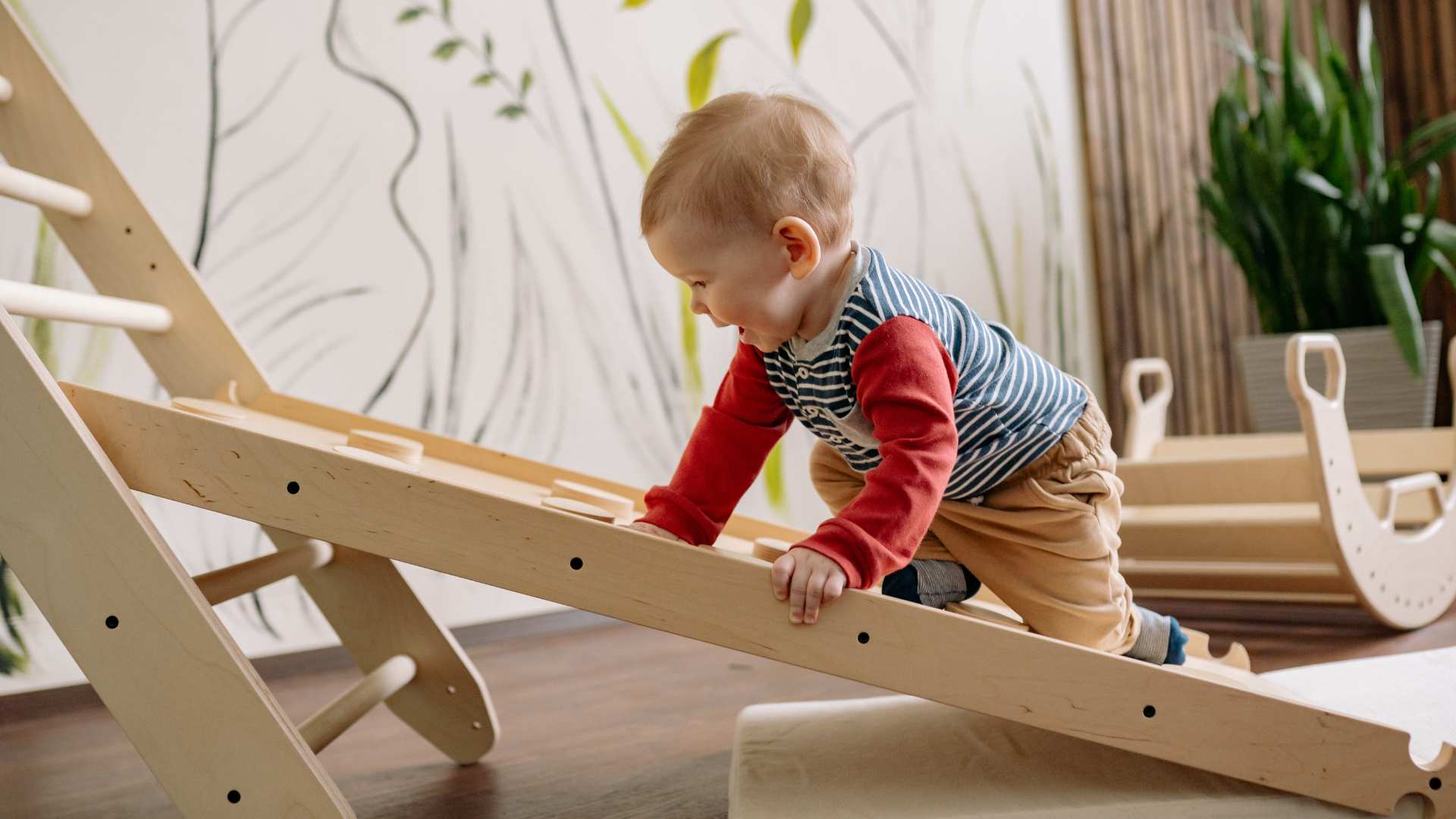
Many 18-month-olds:
- Walk independently
- Climb onto furniture
- Pull toys while walking
- Use their hands to eat with a spoon or drink from a cup
If your child is not meeting several of these 18-month-old developmental milestones, it may be worth discussing with your pediatrician.
Is My 18-Month-Old Behind If They’re Not Talking Yet?
Language delay is one of the most common concerns parents raise.
Some toddlers speak later than others. However, by 18 months, most children use at least a few meaningful words and attempt to communicate intentionally.
Potential concerns include:
- No spoken words at all
- Not pointing or gesturing
- Not responding to their name
- Contacto visual limitado
- Loss of previously used words
If you’re asking, “Is my 18-month-old behind?” because of speech concerns, early evaluation is often the safest next step.
When Could Delays Indicate Autism?
Not all developmental delays mean autism. However, some signs at 18 months may prompt further screening.

What Should Parents Do If They’re Concerned?
If you’re wondering, is my 18-month-old behind?, consider these steps:
- Talk to your pediatrician. Share specific concerns and ask for a developmental screening.
- Request an autism screening. The American Academy of Pedriatics recommends autism-specific screenings at 18 and 24 months.
- Explore early intervention services in Florida. Early Steps is one example, but there are also private therapists, local school district programs, and other community resources that support children under three with developmental delays.
- Seek a comprehensive evaluation if recommended. A developmental pediatrician, neurologist, or autism diagnostic provider can conduct a full assessment.
- Connect with parent support groups or advocacy organizations. Other families’ experiences and advice can be invaluable as you navigate the next steps.
Taking action early does not mean assuming the worst. It means gathering information.
What Can Early Intervention Achieve?
If delays are confirmed, whether related to speech, motor skills, or autism, intervención temprana can significantly impact long-term outcomes.
Research shows that early intervention may:
- Improve communication skills
- Fortalecer la participación social
- Support emotional regulation
- Reduce challenging behaviors
- Increase independence over time
The brain develops rapidly in the first three years of life. Early support during this window can be especially effective.
How Parents Can Support Development at Home

If you’re wondering, “Is my 18-month-old behind?” there are practical ways you can support development at home while waiting for evaluations or services.
Here are additional strategies parents can use:
1. Model Simple Words Repeatedly
Use short, clear words during daily routines (“milk,” “up,” “ball,” “more”). Repetition strengthens language learning.
2. Offer Choices Instead of Yes/No Questions
Hold up two items and ask, “Do you want the apple or the banana?” This encourages communication attempts.
3. Pause and Wait
After asking a question or modeling a word, wait a few seconds. Giving extra processing time can increase responses.
4. Encourage Imitation Games
Clap hands, tap the table, or make simple sounds, and see if your child copies you. Imitation builds social and communication skills.
5. Use Gestures with Words
Wave while saying “bye-bye” or point while naming objects. Pairing movement with language strengthens understanding.
6. Create simple routines
Repeating the same steps during bath time, meals, or bedtime builds predictability and supports learning.
7. Break Skills into Small Steps
If teaching a new skill, such as using a spoon, guide your child step by step rather than expecting independence immediately.
8. Reinforce Attempts, not Perfection
If your child tries to say a word or gesture, respond positively, even if it isn’t clear what they’re trying to say. Encouragement increases repetition.
9. Limit Background Noise
Turn off the TV or music during play to help your child focus on interaction.
10. Practice Simple Turn-Taking
Roll a ball back and forth or take turns stacking blocks. Turn-taking builds early social interaction skills.
Consistent, small efforts throughout the day often support steady progress. If concerns continue, combining these strategies with professional evaluation and early intervention can make an even greater difference.
Why ABA Therapy Is Often Recommended
For children diagnosed with autism or significant developmental delays, Análisis del Comportamiento Aplicado (ABA therapy) is widely recommended by healthcare professionals.
ABA therapy focuses on:
- Teaching communication skills
- Strengthening social interaction
- Building daily living abilities
- Supporting positive behavior patterns
- Breaking skills into manageable steps
- Using positive reinforcement
Modern ABA therapy is individualized, data-driven, and collaborative with families.
When parents ask, “Is my 18-month-old behind?” and autism is later identified, ABA therapy is often part of the recommended early intervention plan.





 English