


Communication Expectations
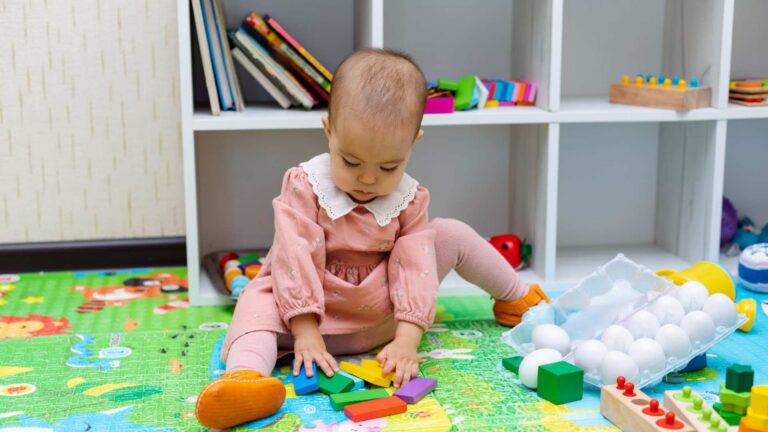
Many toddlers at 18 months:
- Use at least 5–20 single words
- Attempt to imitate words
- Point to request or show interest
- Follow simple one-step directions
- Understand more words than they can say
Social Engagement
At this age, most toddlers:
- Bring toys to show caregivers
- Look at parents for reactions
- Engage in simple pretend play
- Enjoy back-and-forth games
Curiosity and Play
Typical play at 18 months includes:
- Imitating household activities
- Exploring cause and effect
- Showing interest in other children
If several of these areas are not developing, it may raise concerns.
What Are the Signs of Autism in 18 Months?

Some autism signs in toddlers become more noticeable at this age because expectations for interaction increase.
Según la CDC, possible signs of autism at 18 months include:
- No spoken words
- Not pointing to show interest
- Contacto visual limitado
- Not responding consistently to the name
- Not sharing enjoyment (for example, not looking at you after seeing something exciting)
- Lack of pretend play
- Repetitive movements (rocking, hand flapping, spinning)
- Intense focus on specific objects
- Strong distress with routine changes
- Unusual sensory sensitivities
One of the clearest early indicators at 18 months is difficulty with joint attention, the ability to share focus on an object or event with another person.
For example, if a toddler sees an airplane, most will point and look back at their caregiver. When that shared interaction is missing, it may signal a need for evaluation.
Is It Just a Speech Delay?
Parents often ask whether limited speech alone explains the delay.
Speech delay by itself typically looks like:
- Good eye contact
- Frequent gestures
- Strong interest in social games
- Clear understanding of language
When speech delay is combined with reduced social engagement or repetitive behaviors, it may reflect broader developmental differences.
This is why distinguishing general language delay from autism signs in toddlers requires professional screening.
Why 18 Months Is a Key Age for Screening
The American Academy of Pediatrics recommends autism-specific screening at 18 months.
This is not random. By this age:
- Social communication patterns are clearer
- Language expectations increase
- Repetitive behaviors may emerge
- Developmental differences are more observable
Screening tools do not provide a diagnosis. They identify whether a child should receive further evaluation.
If screening suggests concern, a developmental specialist may conduct a comprehensive diagnostic assessment.
How Early Can Therapy Begin?
Children do not need to “wait and see” once concerns are identified.
In Florida, early intervention services are available for children under three who demonstrate developmental delays. If autism is diagnosed, therapy can begin as early as toddlerhood.
Early support focuses on:
- Building communication
- Increasing social interaction
- Teaching play skills
- Strengthening adaptive abilities
The goal is not to change a child’s personality; it is to help them develop functional skills that reduce frustration and increase independence.
What Parents Can Do Right Now
If you’re concerned about signs of autism at 18 months, here are practical steps parents and caregivers can follow:
- Schedule a pediatric appointment and request developmental screening
- Document specific behaviors you’ve observed
- Ask about referral to a developmental specialist
- Contact an autism care provider in Florida if delays are present
- Increase structured interaction at home (reading, turn-taking games, imitation activities)
Early action does not mean assuming a diagnosis. It means gathering accurate information.
What Early ABA Therapy Looks Like at 18 Months
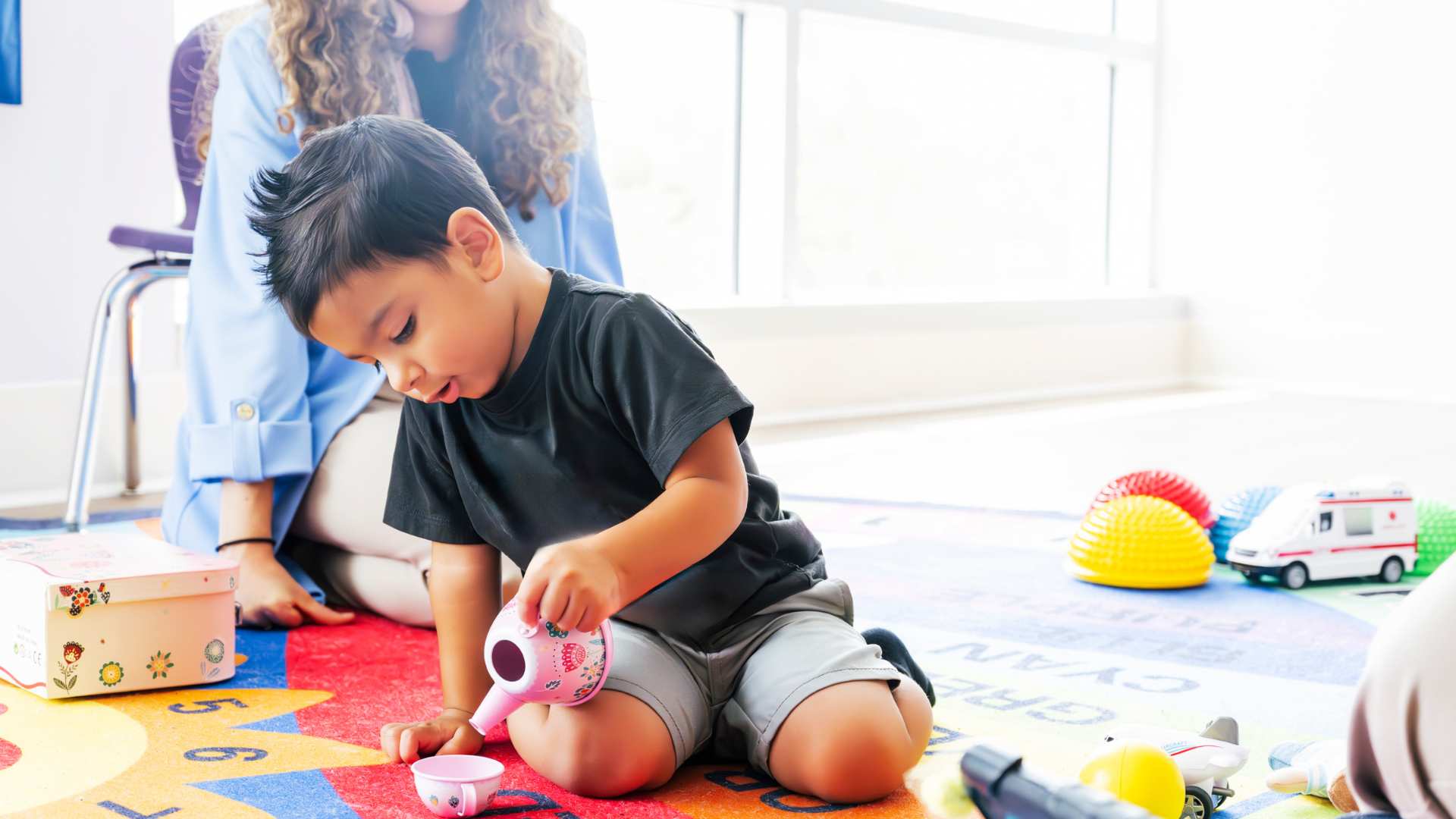
When autism is diagnosed in toddlerhood, early ABA therapy is often recommended because it focuses on foundational skills.
At 18 months, ABA therapy typically targets:
- Functional communication (using words, gestures, or alternative communication)
- Joint attention and shared interaction
- Imitation skills
- Reducing frustration-related behaviors
- Teaching flexibility in routines
Therapy at this age is play-based and developmentally appropriate. Sessions often feel like structured play rather than traditional “therapy.”
Moving Forward ABA Centers of Florida
Searching for signs of autism at 18 months can feel overwhelming. The internet offers mixed messages, and it’s hard to know what applies to your child.
En ABA Centers of Florida, we focus on giving families clear answers, without long waiting periods that delay progress. We provide comprehensive autism evaluations and early intervention services designed specifically for toddlers.
If you are noticing autism signs in toddlers and want guidance from professionals experienced in early childhood development, we encourage you to speak with our team.
Llama al (772) 773-1975 o programar un consulta and learn about next steps. Early clarity leads to early support, and that can make a measurable difference in your child’s development.






 English