

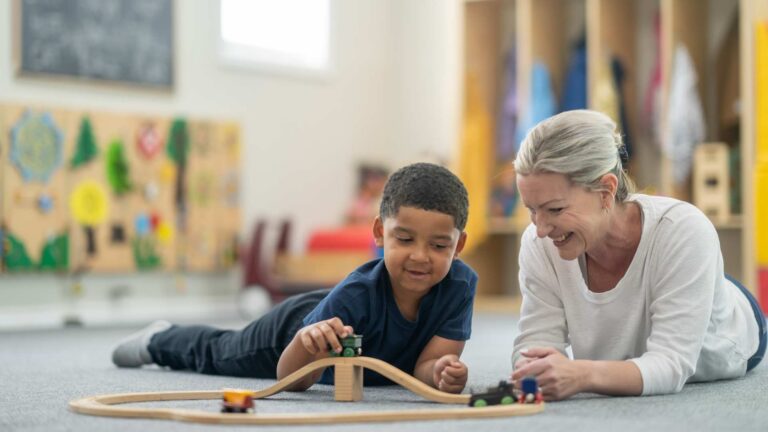
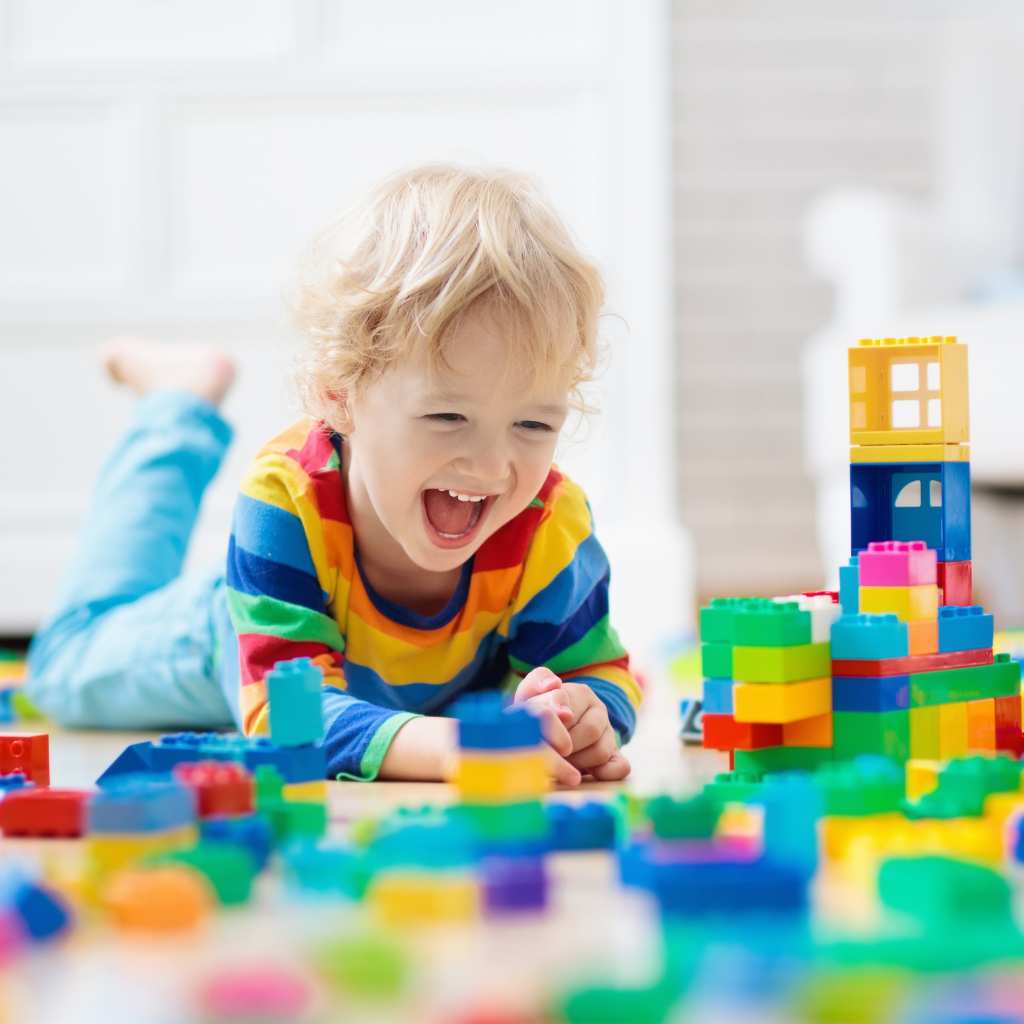
Because play is already how toddlers naturally learn, ABA professionals use play as the foundation for intervention.
Rather than forcing learning into unnatural situations, play-based ABA therapy incorporates teaching into activities children already enjoy.
This often results in greater engagement, more motivation, and more opportunities to practice important developmental skills.
What Is Play-Based ABA Therapy?
Play-based ABA therapy is an approach that uses play and natural interactions to teach skills that support communication, social development, independence, and daily functioning for kids with autism.
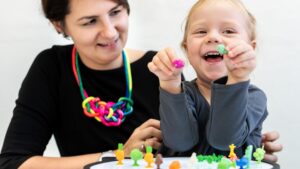
Unlike traditional teaching methods that rely heavily on structured instruction, play-based ABA therapy embeds learning opportunities into activities that are enjoyable and meaningful to the child.
For example, if a toddler loves bubbles, the therapist may use bubbles to teach:
- Requesting
- Eye contact
- Joint attention
- Turn-taking
- Waiting
- Following simple directions
To the child, they are playing with bubbles. To the therapist, they are practicing multiple developmental skills simultaneously.
This ability to combine enjoyment with intentional teaching is one reason play-based ABA therapy is commonly recommended for toddlers and young children with autism.
What Does a Typical Play-Based Session Look Like?
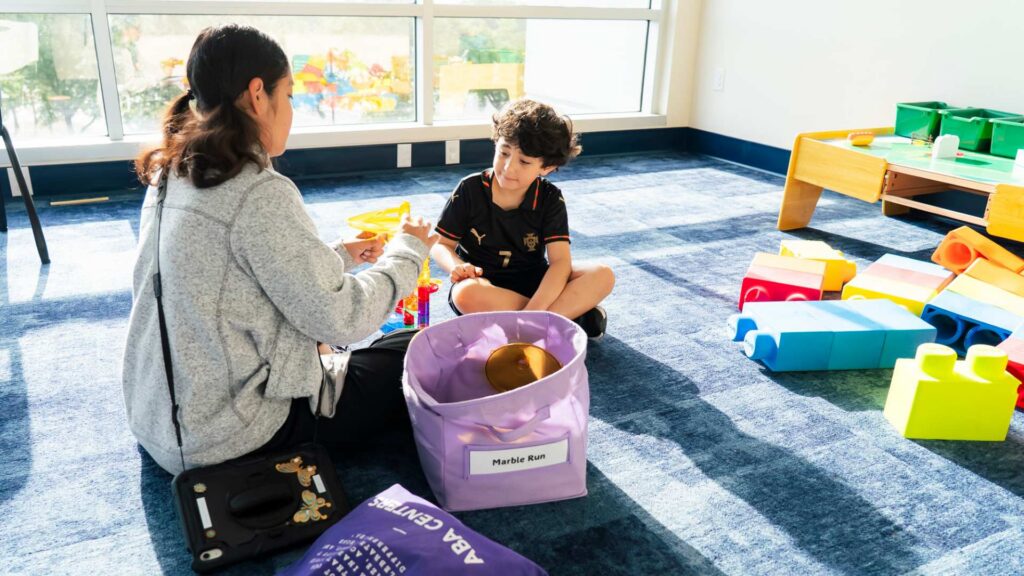
One of the most common questions parents ask is what actually happens during an ABA session.
The answer depends on the child’s goals, developmental level, and interests, but most sessions do not follow a rigid script.
- A therapist may begin by building rapport through preferred activities
- Some children immediately engage with toys. Others need time to warm up
- Throughout the session, the therapist creates opportunities for learning
- If a child wants a toy on a shelf, the therapist may encourage communication before handing it over
- If a child is building with blocks, the therapist may model turn-taking
- If a child enjoys movement games, the therapist may work on following instructions and responding to social cues
- Snack time can become an opportunity to practice requesting
- Cleanup time can become an opportunity to build flexibility and transitions
- Story time can be an opportunity to develop attention and language skills
The learning opportunities are woven into activities that feel natural for the child.
The Clinical Purpose Behind the Play
One misconception about play-based ABA therapy is that therapists are simply “playing with kids.”
In reality, every session is guided by clinical objectives.
Before therapy begins, a BCBA conducts an assessment and develops measurable goals.
These goals may target areas such as:
- Communication
- Social interaction
- Play skills
- Emotional regulation
- Daily living skills
- Safety awareness
- Adaptive behavior
The therapist implements activities designed to support those goals. Importantly, progress is tracked continuously.
Data collection occurs throughout sessions to measure whether skills are improving, remaining stable, or requiring adjustments.
This is one of the major differences between casual play and therapeutic play.
The activities may look similar on the surface, but the purpose, measurement, and clinical decision-making behind them differ significantly.
Research examined nearly 400 studies on play-based interventions for autistic children ages 2–8 to better understand how play can support the development of social, communication, and language skills. The researchers found that many therapies use play because it is a natural, enjoyable way for children to learn and practice interacting with others.
Communication Is Often the First Priority
Many toddlers receiving ABA therapy have limited communication skills.
Some are not speaking yet.
Others use a few words inconsistently.
Some communicate primarily through gestures, crying, or behavior.
Because communication affects nearly every part of daily life, it often becomes a major focus of play-based ABA therapy.
A therapist may use favorite toys or activities to encourage:
- Pointing
- Gesturing
- Requesting
- Responding to the name
- Making choices
- Using words
- Using alternative communication systems
For example, an ABA professional may hold a favorite toy for a moment to create an opportunity for the child to communicate.
Social Skills Begin Through Play
Parents often associate social skills with older children.
In reality, social development begins long before preschool.
Many foundational social abilities emerge during toddlerhood, including:
- Joint attention
- Imitation
- Shared enjoyment
- Turn-taking
- Responding to others
Play-based ABA therapy creates countless opportunities to practice these skills.
Games, songs, pretend play, and interactive activities all become tools for building social engagement.
These early social experiences lay the foundation for future relationships and learning.
Difference Between ABA Therapy and Play Therapy
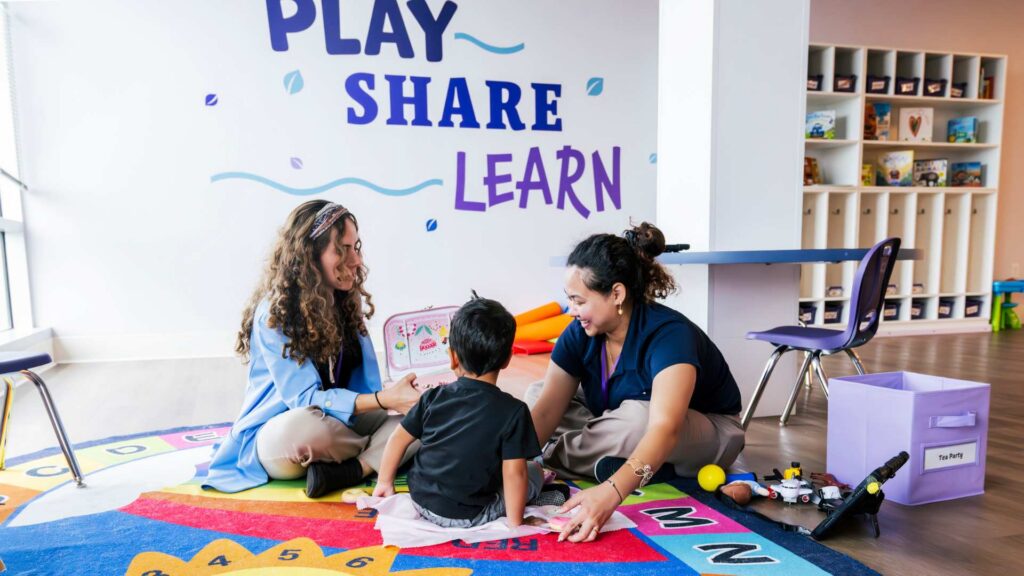
It’s easy to see why families don’t know the difference between ABA therapy and play therapy; both often involve toys, games, and plenty of fun. But while sessions may look similar on the surface, the goals and methods are quite distinct.
Play therapy is child-led and designed to help children process their emotions, work through experiences, and gain emotional insight through free play. The therapist observes and gently guides, using play as a window into the child’s inner world.
On the other hand, ABA therapy uses play as a purposeful teaching tool. Therapists select activities based on specific, measurable goals for skills like communication, social interaction, or daily routines. Progress is tracked through data, and interventions are continuously adjusted to support the child’s growth.
Both approaches can be valuable for children, but their purposes are different: play therapy focuses on emotional expression and healing, while ABA therapy uses play to teach and reinforce concrete skills that support daily life.
Benefits of Play-Based ABA Therapy
The benefits of play-based ABA therapy extend beyond the acquisition of specific skills.
Because toddlers are engaged and motivated, learning often feels more natural and enjoyable.
Families frequently report improvements in:
- Communication
- Social interaction
- Play skills
- Following routines
- Independence
- Flexibility
- Emotional regulation
- Participation in family activities
Perhaps most importantly, children are learning within contexts that closely resemble their everyday lives.
This increases the likelihood that skills will generalize beyond therapy sessions.





 Español